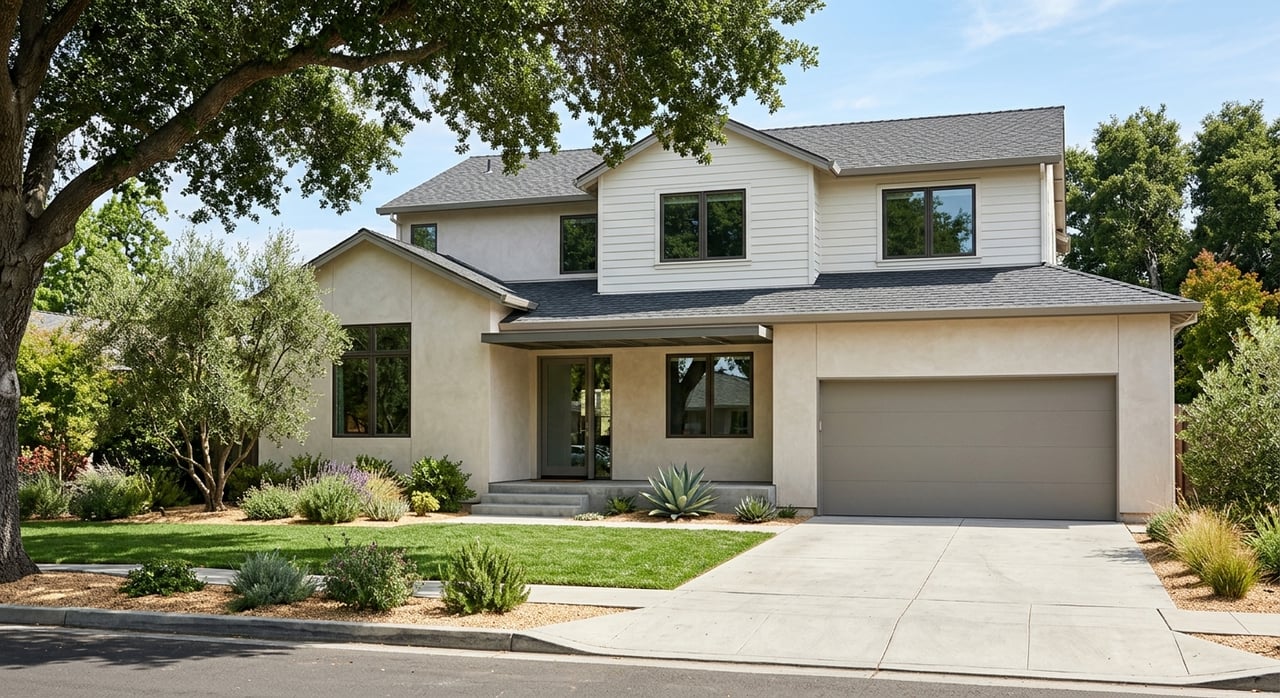
Timing Your San Ramon Home Sale For Maximum Return
May 28, 2026
May 28, 2026
Wondering when to list your San Ramon home so you do not leave money on the table? That is a smart question in a market that still favors sellers, but no longer rewards every listing equally. If you want the best return, you need more than a seasonal rule of thumb. You need a timing plan built around local inventory, property type, pricing discipline, and your next move. Let’s dive in.
San Ramon is still behaving like a seller’s market in spring 2026, but it is a more selective one than many owners expect. Current data shows strong pricing and relatively fast sales, yet buyers are clearly comparing options and pushing back when a home misses the mark.
Realtor.com reports a median listing price of $1.4 million, 212 homes for sale, a 100% sale-to-list ratio, and a median 27 days on market in March 2026. Redfin shows a median sale price of $1.515 million, 20 days on market, and 46.7% of homes selling above list. Zillow’s April 30, 2026 update places typical home value at $1,537,480, with homes pending in about 15 days.
That sounds strong, and it is. But it does not mean every seller should rush to market without a plan.
Redfin also shows that 25.4% of listings had price drops in March 2026. Zillow’s March 2026 snapshot adds another important point: 56.3% of sales closed under list price, while 39.3% closed over list. In other words, San Ramon still rewards well-positioned listings, but buyers are selective.
If you are searching for the best season to sell, the local data points to a clear pattern for detached homes. Bay East’s San Ramon detached report shows average days on market in the mid-teens during spring 2026, compared with roughly 34 to 35 days in October and November 2025.
That makes late winter through spring the cleanest launch window for many detached homes. Sale-to-list ratios stayed near 98% to 102% over the same period, which suggests sellers can still capture strong pricing when the home is timed and presented well.
Still, San Ramon is not one uniform market. Your timing should reflect your home type, your neighborhood, and the level of competition you will face when you list.
One of the biggest timing mistakes sellers make is assuming a condo, townhouse, and detached house will all follow the same rhythm. In San Ramon, the local numbers show that is not the case.
For detached homes, Bay East data suggests the stronger launch window is late winter through spring. During that period, average days on market dropped back to roughly 14 to 16 days by February through April 2026.
That pace lines up with other citywide indicators showing buyers are still active. Redfin says homes in San Ramon receive 2 offers on average, and hot homes can go pending in about 8 days.
For attached homes, the timeline is very different. Bay East’s April 2026 San Ramon condo and townhome report shows 83 days on market, 5.4 months of inventory, and sales at 98% of list price.
That does not mean attached homes cannot sell well. It means sellers in that segment should plan for a longer runway, more pricing sensitivity, and less certainty that seasonal demand alone will carry the listing.
Even in a seller’s market, timing is not just about the calendar. It is also about how much competition buyers will see when your home goes live.
Contra Costa County’s April 2026 mid-year update showed active listings up 13.2% and months of supply at 2.4. That is still a relatively tight market, but it also tells you supply is improving.
San Ramon-specific data shows the same trend. Realtor.com reported listings up 30.34% month over month and 13.17% year over year as of March 2026. If you wait too long, you may face more competing listings than you would have seen earlier in the season.
Before you commit to a launch week, focus on these local signals:
The goal is simple: list when buyers are active, but before your competition grows too crowded.
Citywide averages are helpful, but they can hide important differences across San Ramon. Neighborhood-level pricing and pace can vary enough to affect your strategy.
Realtor.com shows neighborhood median listing prices ranging from $618,500 in Canyon Lakes South to $2,068,000 in Windemere. It also shows days on market ranging from 20 in Windemere to 47 in Crow Canyon.
That matters because a home in a higher price band or a slower-moving pocket may need a different launch plan than a home in a fast-moving segment. Looking only at the citywide average can give you a false sense of urgency or confidence.
Timing can help you capture attention, but pricing is still what protects your return. In a market where nearly a quarter of listings saw price drops, the wrong list price can cancel out the benefit of a strong season.
A good launch price should reflect current competing inventory, recent local sales, and how buyers are behaving in your neighborhood and property type. If you price too high because it is spring, buyers may simply wait, compare, and move on.
This is where a finance-first approach matters. Maximum return is not always about naming the highest possible list price. It is about choosing the price that creates the right amount of demand, supports negotiation, and helps you avoid costly time on market.
For many San Ramon detached homeowners, the most defensible timing strategy is a late winter through spring launch window. Local Bay East trends support that pattern, with faster days on market and steady sale-to-list performance during stronger months.
For condo and townhouse sellers, the answer is more cautious. Because attached homes are taking much longer to sell on average, your best timing may depend less on season alone and more on inventory levels, pricing discipline, and how many similar units are already on the market.
That is why the best time to sell is rarely a single perfect date. It is usually a well-chosen window supported by local data.
If your sale is tied to your next purchase, timing becomes a bigger financial decision. The best month to sell is not just the month that could produce a strong list price. It is the month that gives you enough exposure, protects your leverage, and still leaves room for a workable move.
A one-size-fits-all timeline can be risky here. Detached homes in stronger months may move in roughly two weeks, while attached homes can take much longer. If you sell without a plan for financing and replacement housing, a good sale can still create unnecessary stress.
A smart sequence for many sellers looks like this:
This kind of planning helps you think in net terms, not just top-line sale price. That is often where better outcomes come from.
If your goal is maximum return, think beyond the headline price. A strong outcome usually comes from a mix of factors working together:
In today’s San Ramon market, sellers still have leverage. But the edge belongs to the homeowners who treat timing as a strategy, not a guess.
If you want help building a sale plan around your equity, timing, and next move, Valley To Valley Realty can help you evaluate the right window with a clear, data-driven strategy.
Stay up to date on the latest real estate trends.
Whether you’re buying, selling, or planning ahead, Valley To Valley Realty is here to guide you with clarity and purpose. Reach out today and take the next step toward a confident real estate future.
Get In Touch With Us

VALLEY TO VALLEY REALTY
Francine Masudi | CA DRE# 02236450
(209) 513-3323
[email protected]
Rick Arciniega | CA DRE# 01101436
OFFICE HOURS
Monday - Friday
9AM - 5:00PM
ADDRESS 3017 Douglas Blvd, STE 300 Roseville, CA, 95661