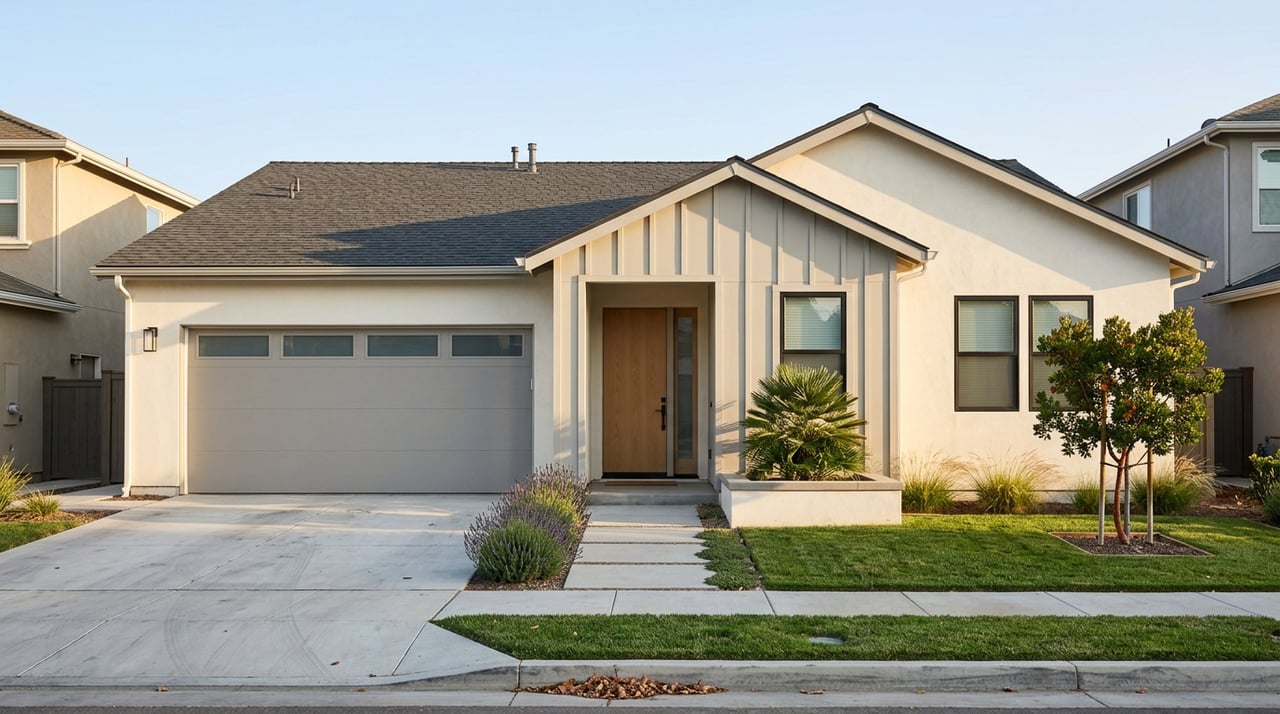
A First Time Homebuyer Guide to Livermore’s Newer Areas
June 11, 2026
June 11, 2026
Buying your first home in Livermore can feel like trying to hit a moving target. You want something newer and lower-maintenance, but you also need to understand price, commute, HOA costs, and what is actually available now. This guide will help you make sense of Livermore’s newer neighborhoods so you can compare options with more confidence and a clearer financial lens. Let’s dive in.
If you are looking for newer construction in Livermore, most of it is not scattered evenly across town. The city’s newer for-sale supply is concentrated in a few planned growth areas, especially the Isabel Neighborhood Specific Plan corridor and Arroyo Crossings.
That matters because your search will be more efficient when you focus on the neighborhoods and project clusters where new inventory is actually being added. It also means many of the newest homes share similar design patterns, ownership structures, and community amenities.
The Isabel Neighborhood Specific Plan allows for 4,095 new multifamily units and about 2.1 million square feet of office, business park, and commercial space. The plan also includes three neighborhood parks, pedestrian and bike facilities, and infrastructure improvements.
For a first-time buyer, that tells you two things. First, this area is a major source of future housing supply. Second, the neighborhood experience is being built around a more connected, planned environment rather than a traditional large-lot subdivision pattern.
Arroyo Crossings is one of the clearest current centers for newer owner-occupied housing in Livermore. It includes four neighborhoods with a total of 435 residences: Alicante condos, Amara townhomes, Solera townhomes, and Verdello detached homes.
This mix gives you a rare chance to compare multiple home types in one broader community. If you are unsure whether a condo, townhome, or detached home best fits your budget and lifestyle, this kind of side-by-side comparison can be especially useful.
A large share of Livermore’s newer housing is attached product. That includes condos, townhomes, and mixed-tenure developments instead of mostly detached homes with larger private yards.
Recent examples include Cava/Triad West with 112 for-sale condominiums, Shea Serenity with 89 for-sale condominiums plus 210 rental apartments, Shea Aura with 164 for-sale condominiums, Cornerstone with 143 for-sale townhomes plus 110 apartments, and Lassen Townhomes with 186 for-sale townhomes. In short, newer Livermore inventory leans heavily toward space-efficient formats.
For many first-time buyers, attached housing can offer a more accessible entry point into Livermore. Based on market data in the research, Livermore’s attached homes often sit below the citywide detached pricing level.
That does not automatically make them the right fit for everyone. It does mean they deserve serious attention if you are trying to balance monthly cost, location, commute, and long-term ownership goals.
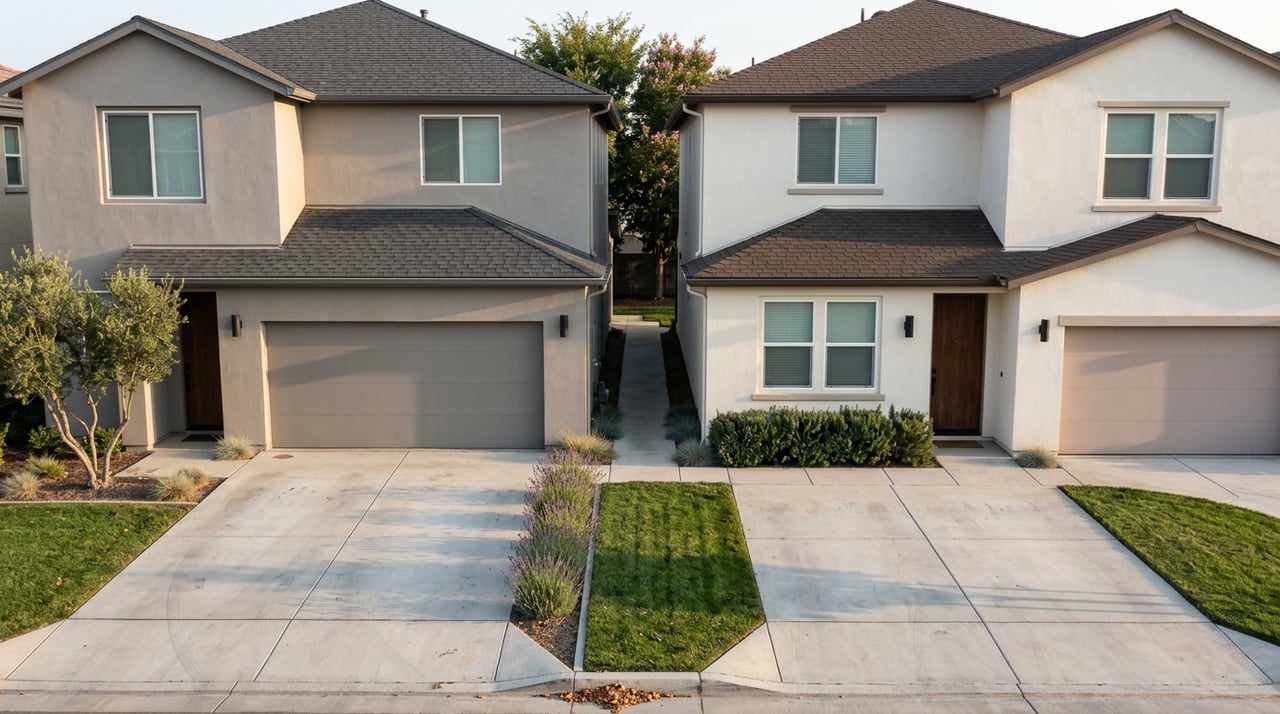
Newer homes in Livermore often prioritize efficient layouts over extra land. You will commonly see three-story condos and townhomes, open-concept living areas, balconies or rooftop terraces, and attached garages.
This design approach reflects how much of the city’s recent inventory has been planned. Builders are creating homes that make good use of the footprint while pairing them with shared amenities and open space.
Across recent projects, these features show up often:
For example, Cava condos range from about 1,000 to 1,800 square feet. Shea Aura condos range from about 1,400 to 1,850 square feet, with tandem or side-by-side garages plus rooftop terraces or balconies. Solera townhomes range from 1,585 to 1,845 square feet with 3 to 4 bedrooms, 2.5 to 3.5 baths, and two-car garages.
Arroyo Crossings shows the spread of today’s newer product types in one place:
| Neighborhood | Home Type | Approx. Size Range |
|---|---|---|
| Alicante | Condos | 1,187 to 1,436 sq. ft. |
| Solera | Townhomes | 1,585 to 1,845 sq. ft. |
| Amara | Townhomes | 1,913 to 2,094 sq. ft. |
| Verdello | Detached homes | 2,340 to 2,605 sq. ft. |
If you are comparing options, this range is helpful because it shows how your budget may align with different ownership styles. In many cases, you may be choosing between more private outdoor space and a newer interior with shared amenities.
One of the most important things to understand is that not every newer Livermore project is ready for purchase today. Some communities are under construction, some are approved but not yet started, and some are still under review.
That is why timing matters just as much as interest. You may love a floor plan online, but the real question is whether homes are already selling, partially delivered, or still waiting on permits and builder release schedules.
According to the research provided:
For you, that means availability can change quickly. It is smart to verify current release timing, phase delivery, and whether the homes you are seeing are actually available for contract.
In newer condo and townhome communities, HOA review is not a side task. It is a core part of your buying decision.
California’s Department of Real Estate says public reports for new subdivisions contain the CC&Rs, HOA costs and assessments, and other material disclosures, and buyers should receive that report before becoming obligated to buy. The same guidance notes that CC&Rs run with the land, so those rules stay attached to the property after a sale.
When you compare newer Livermore neighborhoods, make sure you review:
This is more than paperwork. The California Department of Real Estate warns that underfunded HOAs can lead to deferred maintenance, special assessments, and even value or financing issues if common areas fall into disrepair.
California law requires annual budget reporting for HOAs under Civil Code 5300. Civil Code 5550 requires a reserve study and visual inspection of major components at least once every three years, with annual board review, and Civil Code 5565 requires the reserve summary to be based on the most recent reserve study.
For certain condominium buildings with three or more attached multifamily dwelling units, Civil Code 5551 requires exterior elevated element inspections every nine years, with the first inspection completed by January 1, 2025. For a first-time buyer, the practical takeaway is simple: ask whether the association is keeping up with both its financial planning and required inspections.
If you work in or travel through the Tri-Valley or beyond, commute access should be part of your neighborhood comparison. In Livermore, transit access and freeway options can influence both convenience and buyer demand over time.
The city’s transit system centers on ACE rail and the Livermore Transit Center. The city says ACE has one station near downtown by the transit center and another at Vasco Road near Lawrence Livermore National Laboratory. The transit center also connects to WHEELS and offers access toward neighboring cities and BART.
WHEELS routes such as 10R, 30R, and 580X connect through the Livermore Transit Center and toward the Dublin/Pleasanton BART area. For drivers, the I-580 Express Lanes run eastbound from Hacienda Drive in Pleasanton to Greenville Road in Livermore and westbound from Greenville Road to just before the I-680 overpass in Dublin.
Those express lanes operate Monday through Friday from 5 a.m. to 8 p.m. Alameda CTC also notes that carpools with a FasTrak Flex tag can travel toll-free.
For first-time buyers, this matters because two homes with similar square footage can feel very different in day-to-day life depending on access to transit, freeway routes, and commute flexibility.
Livermore remains competitive, but it still sits below nearby Dublin and Pleasanton on price based on the research provided. Redfin reports a Livermore median sale price of $1.1 million over the last three months, compared with about $1.30 million in Dublin and about $1.48 million in Pleasanton.
Livermore’s market also remains active, with about 11 days on market and three offers on average. In the attached segment, Bay East reported a median sale price of $735,000 in April 2026, with 3.2 months of supply, 15 sold, and a 50-day average days on market.
If you are trying to enter the Tri-Valley market, newer condos and townhomes in Livermore may offer a more realistic starting point than nearby cities with higher median pricing. That can be especially relevant if you want newer finishes, lower-maintenance living, or a location that supports a Bay Area or Tri-Valley commute.
At the same time, newer detached homes in Livermore may price much closer to the citywide detached market. So if your budget is tight, attached housing is often where the strongest entry-level opportunities will be.
A newer home is not automatically a better investment just because it is new. Long-term value is more likely to depend on supply within the immediate area, commute access, HOA health, and how well the home type fits future buyer demand.
Livermore’s newer neighborhoods may benefit from continued buildout, neighborhood freshness, and growing amenities. But because some areas are still adding supply, you may also face near-term competition from similar units in the same community or nearby phases.
When you compare newer neighborhoods, ask yourself:
These questions can help you think beyond the model home and focus on the bigger financial picture. That is often where stronger long-term decisions are made.
Buying your first home in Livermore’s newer neighborhoods is not just about finding what looks best today. It is about matching your budget, commute, ownership costs, and future resale goals with the right community type. If you want a finance-minded, high-touch strategy for comparing condos, townhomes, and newer detached options in Livermore, Valley To Valley Realty can help you evaluate the numbers and the neighborhood fit with confidence.
Stay up to date on the latest real estate trends.
Whether you’re buying, selling, or planning ahead, Valley To Valley Realty is here to guide you with clarity and purpose. Reach out today and take the next step toward a confident real estate future.
Get In Touch With Us
VALLEY TO VALLEY REALTY
Francine Masudi | CA DRE# 02236450
(209) 513-3323
[email protected]
Rick Arciniega | CA DRE# 01101436
OFFICE HOURS
Monday - Friday
9AM - 5:00PM
ADDRESS 3017 Douglas Blvd, STE 300 Roseville, CA, 95661