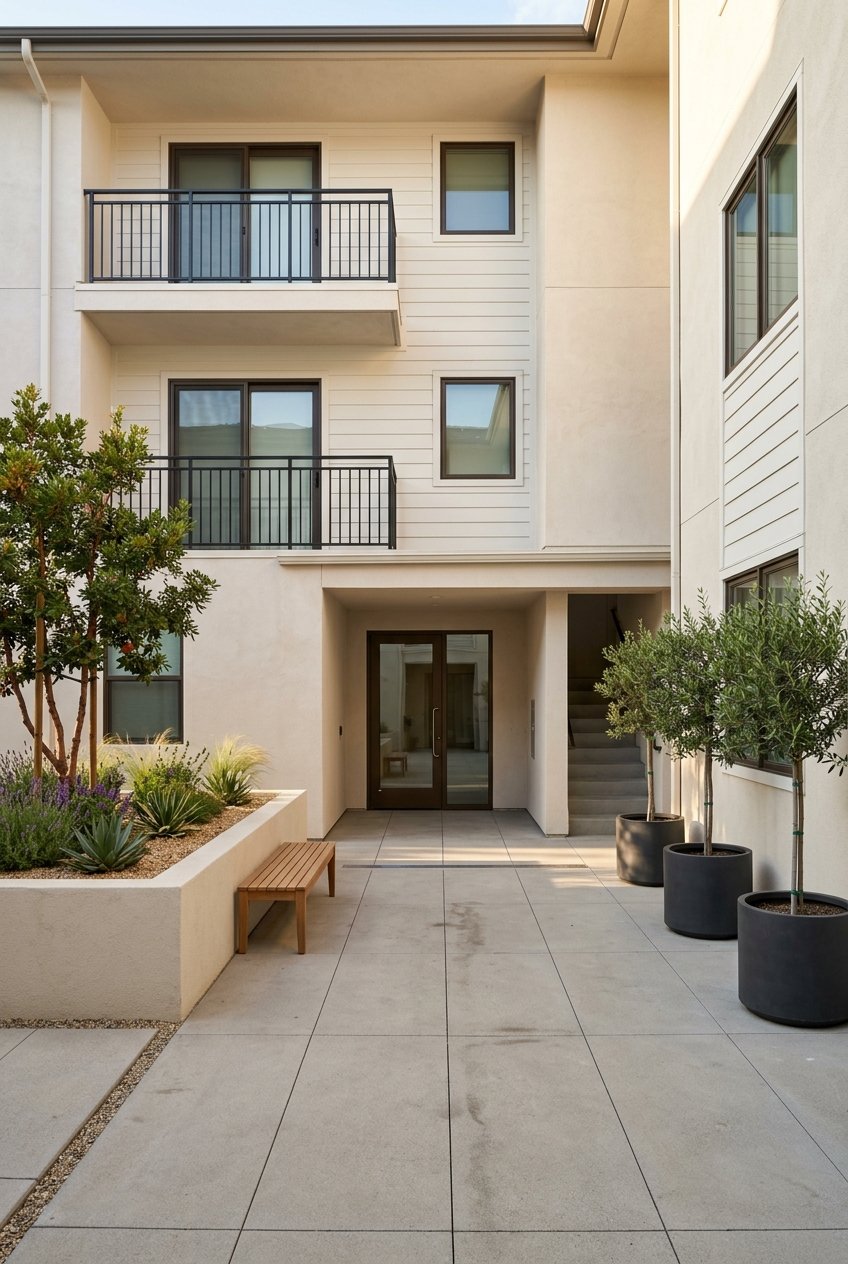
How Fremont Condo Investment Fits a Long-Term Strategy
May 7, 2026
May 7, 2026
Buying into Fremont real estate is expensive, even by Bay Area standards. If you want long-term exposure to this market but do not want the price tag of a detached home, a condo can be a more practical entry point. The key is knowing where a Fremont condo fits in your bigger investment plan, what costs can change your returns, and which local factors may support demand over time. Let’s dive in.
Fremont sits in a high-cost housing market. The U.S. Census Bureau reports a median value of owner-occupied homes at $1,403,800, along with median monthly owner costs with a mortgage above $4,000.
In that context, condos often serve as a lower-capital way to own in Fremont rather than a direct replacement for a detached home. Recent data supports that role. PropertyShark reported a Fremont condo median sale price of $950,000 in Q4 2025, while Redfin showed 99 active condos for sale with a median listing price of $700,000.
That price gap matters if you are trying to balance location, cash flow, and long-term equity. A condo may let you enter the Fremont market sooner, preserve more liquidity, or avoid stretching too far on a purchase.
A long-term investment plan works best when the local market has durable demand drivers. Fremont has several that stand out, especially for condo buyers who care about rentability, resale, and future buyer interest.
According to the city, Fremont has more than 900 manufacturing and hardware companies. Major employers include Meta, Tesla, Lam Research, Apple, Western Digital, Seagate, Boehringer Ingelheim, and ThermoFisher.
The city also points to major employment hubs in Warm Springs, Bayside, Ardenwood, and Downtown or City Center. For investors, that matters because local job concentration can help support both ownership demand and rental demand over time.
Condos often perform best in places where transportation and job access are strong. Fremont has multiple transit-oriented areas that can support that story.
The city says the Warm Springs Innovation District is anchored by the Warm Springs or South Fremont BART station and spans 850 acres of transit-oriented residential development and technology park space. Downtown Fremont is within walking distance of BART, and the city says its community plan allows for up to 2.5 million square feet of commercial space and 2,500 residential units.
The city's transit-oriented overlays also apply around Fremont and Warm Springs BART, the future Irvington BART station, and the ACE or Amtrak station in Centerville. If you are thinking long term, location near these transit nodes deserves close attention.
Fremont’s 2024 population estimate was 228,192. The Census Bureau also reports a 60.8% owner-occupied housing rate, median household income of $181,506, bachelor’s degree attainment of 63.9%, and a mean travel time to work of 30.3 minutes.
Those numbers do not guarantee performance, but they do point to a sizable, high-income market with a professional commuter base. That can be helpful when you are evaluating long-term owner demand and rental demand.
If you are buying a condo as part of an investment strategy, you need to separate price appreciation hopes from current income reality. In Fremont, rental income can help, but it may not carry the full investment story on its own.
Zillow puts average rent in Fremont at $3,078 as of March 31, 2026. Using that figure against PropertyShark’s $950,000 condo median sale price suggests a rough gross rent yield of about 3.9% before HOA dues, property tax, insurance, and maintenance. Using the Census median gross rent of $2,933 gives a rough gross yield of about 3.7%.
That is not a published cap rate. It is simply a rough way to frame how rent and pricing relate before expenses.
For many buyers, this means a Fremont condo is less about strong immediate cash flow and more about:
This is where many condo buyers make mistakes. The purchase price is only part of the investment picture.
Condo ownership usually comes with HOA dues that are paid separately from the mortgage. The Consumer Financial Protection Bureau says condo and HOA fees often range from a few hundred dollars per month to more than $1,000 per month.
That range can have a major effect on your monthly carrying cost. A condo that looks affordable at first glance may feel very different once you add dues on top of principal, interest, taxes, insurance, and any vacancy or maintenance assumptions.
The California Attorney General explains that HOAs make and enforce rules for condominium buildings, and the governing CC&Rs define rights, responsibilities, and limitations. The California Department of Real Estate also notes that some common-interest developments limit rentals or require rental agreements to acknowledge association rules.
If your plan involves renting the unit now or later, you should review the association documents carefully before you buy.
Property taxes are another key line item. Alameda County says secured roll property tax bills are paid in two installments each fiscal year, and supplemental tax bills can create added liabilities that remain the owner’s responsibility even if a lender escrows the regular tax bill.
The Alameda County Assessor also states that Proposition 13 limits annual assessed value growth to 2%. A homeowners’ exemption can reduce taxable value for a primary residence, though that usually does not apply to an investment condo.
If you are underwriting a Fremont condo, it is smart to plan for both regular property taxes and the possibility of a supplemental bill after purchase.
Condo insurance works differently from insurance on a detached house. The California Department of Insurance says condo owners can buy earthquake insurance, and the California Earthquake Authority explains that HOA master policies often cover only the exterior structure and common areas.
That means your own condo-unit policy may still need to cover building property, personal property, loss of use, and loss assessment. From an investment perspective, insurance should be treated as a real operating cost, not a minor afterthought.
One of the most important condo investment questions is whether the HOA is financially healthy. The California Department of Real Estate says associations should have an adequate insurance program, a solvent budget, and sufficient reserves.
It also notes that boards can typically raise regular assessments by up to 20% per year without owner approval under the usual California rule. That makes reserve strength and budget quality especially important for long-term planning.
A lower HOA fee is not always better if the association is underfunded. In some cases, a weak reserve position today can mean higher dues, special assessments, or buyer hesitation later.
A common mistake is to treat all Fremont condos as one market. In reality, condo performance is often highly building-specific.
PropertyShark reported Fremont condo median sale prices at $950,000 in Q4 2025, essentially flat year over year. Redfin’s condo data also showed 99 active listings, a $700,000 median asking price, and about 35 days on market.
That tells you broad citywide demand is only part of the picture. Building condition, HOA quality, parking, amenities, unit layout, and exact location inside Fremont can all affect resale.
The city’s long-range development plans help explain where demand may hold up best over time. The Warm Springs Innovation District is anchored by Tesla and the Warm Springs or South Fremont BART station, spans 850 acres, and is on track to support more than 40,000 technology jobs by 2035, according to the city.
Downtown Fremont is another area to watch. The city says it is within walking distance of BART, has an active mixed-use pipeline, and is approved for substantial commercial and residential growth.
That does not mean every condo near these areas will outperform. It does mean location tied to jobs, transit, and ongoing development deserves extra weight in your analysis.
For the right buyer, a Fremont condo can fit well in a long-term investment plan. It tends to make the most sense when you want Bay Area exposure at a lower entry price than the broader owner-occupied market and you are willing to underwrite costs conservatively.
A Fremont condo may be a strong fit if you are:
It may be a weaker fit if your main goal is immediate strong cash flow or if you are not prepared for HOA, tax, and insurance complexity.
The smartest way to evaluate a Fremont condo is to treat it like a full financial asset, not just a lower-priced home. That means looking at the monthly carrying cost, rental rules, reserve quality, location, and probable resale audience together.
In a market like Fremont, the upside is often tied to access, scarcity, and long-term demand drivers. The risk is that a weak building or poorly run HOA can drag down performance even in a strong city.
If you want help thinking through whether a specific Fremont condo supports your long-term goals, Valley To Valley Realty brings a finance-first approach to buying, selling, and investment strategy across Bay Area and valley markets.
Stay up to date on the latest real estate trends.
Whether you’re buying, selling, or planning ahead, Valley To Valley Realty is here to guide you with clarity and purpose. Reach out today and take the next step toward a confident real estate future.
Get In Touch With Us

VALLEY TO VALLEY REALTY
Francine Masudi | CA DRE# 02236450
(209) 513-3323
[email protected]
Rick Arciniega | CA DRE# 01101436
OFFICE HOURS
Monday - Friday
9AM - 5:00PM
ADDRESS 3017 Douglas Blvd, STE 300 Roseville, CA, 95661