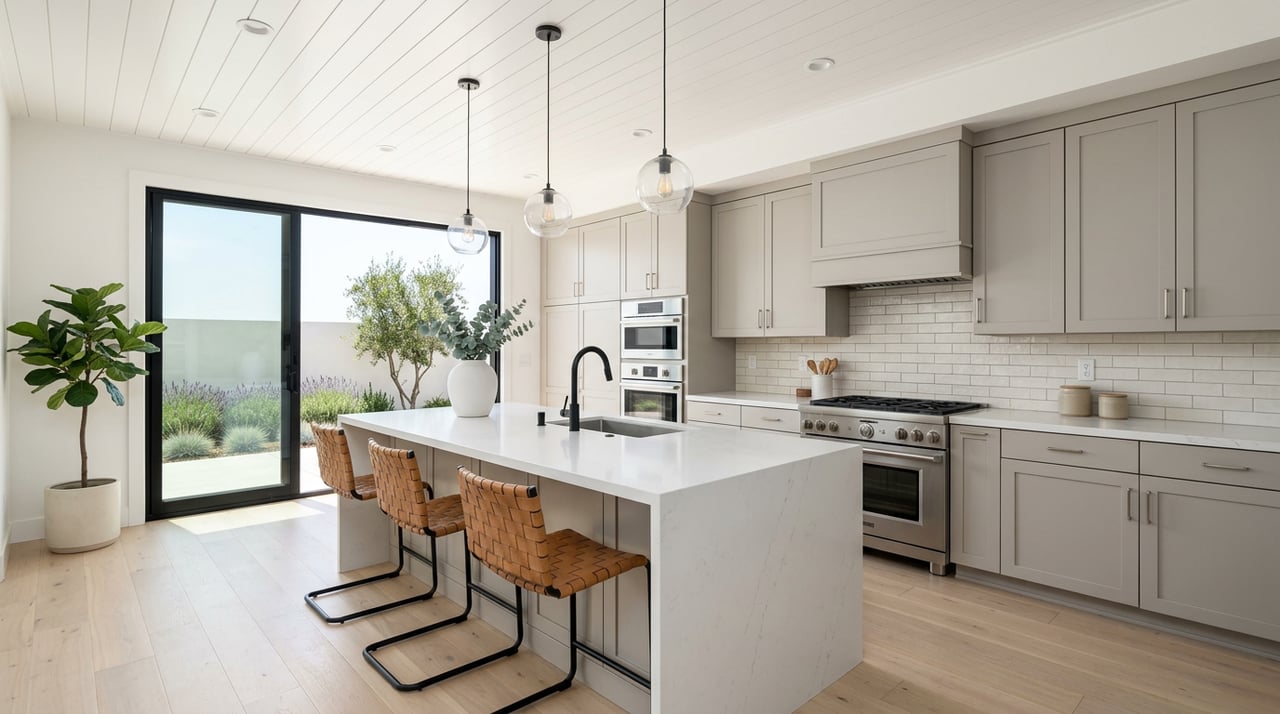
Buying a Home in Pleasanton or a Nearby Tri-Valley City
March 5, 2026
March 5, 2026
Are you torn between buying in Pleasanton or a nearby Tri‑Valley city? You are not alone. Price, commute, schools, and long‑term resale all matter, and the right answer depends on your priorities. In this guide, you will see clear comparisons so you can match your budget and lifestyle to the best fit. Let’s dive in.
Pleasanton typically sits at the higher end of the Tri‑Valley price range. Recent public snapshots show Pleasanton’s citywide median sale price near the mid to high $1.4M range in Jan 2026, with Zillow’s typical value around $1.52M through Jan 31, 2026. Local single‑family medians often land higher, roughly $1.6M to $1.7M depending on neighborhood and time frame.
Nearby cities trend lower on a citywide basis. Dublin and Livermore both run closer to the low $1.1M range in recent snapshots. San Ramon is around the low $1.3M range, while Danville often matches or exceeds Pleasanton. Fremont is near the low $1.2M range, Castro Valley around the low $1.0M range, Hayward near the mid $800Ks, and Oakland closer to the mid $600Ks citywide. These medians include all home types. Condo‑heavy cities may look cheaper than houses‑only comparisons.
Using Jan 2026 medians across all types, Pleasanton shows roughly a 25 to 32 percent premium over Dublin and Livermore. Against San Ramon, the premium is smaller at about 15 percent. Danville can be at or above Pleasanton depending on the source and housing type. If you are focused on single‑family homes, compare houses‑only medians to keep it apples to apples.
Pleasanton shares the Dublin/Pleasanton BART hub with Dublin, which offers frequent service into central Oakland and San Francisco. Typical BART trips to downtown San Francisco from Dublin/Pleasanton run near one hour depending on the station and service pattern. If you want a walkable or quick shuttle distance to BART, parts of Dublin may offer closer proximity at a lower entry price. For general BART context, see the system’s regional overview.
If your job sits near San Jose or the broader South Bay, the ACE commuter line serves both Pleasanton and Livermore with service to Diridon Station and points north. Schedules are limited and best for set office hours, but the option adds flexibility for some commuters. You can review stops and schedules through ACE on 511.
Peak drive times vary widely with traffic. As a planning baseline, Pleasanton to downtown San Francisco can run 45 to 75 minutes at peak. Pleasanton to central San Jose is often 35 to 60 minutes depending on origin and route. Livermore is typically longer for SF drives and comparable for South Bay drives, while San Ramon and Danville can route via I‑680 and CA‑24 for Oakland and Walnut Creek.
A planned rail connection called Valley Link would tie Dublin/Pleasanton BART to the ACE corridor through Livermore toward the Central Valley. The project is advancing through environmental and pre‑construction steps. If delivered, Valley Link could reduce commute friction along the Tri‑Valley corridor, which is a positive signal for future resale. Track updates on the Valley Link CEQA page.
Pleasanton skews toward established, owner‑occupied single‑family neighborhoods with limited vacant land. According to U.S. Census QuickFacts 2020 to 2024, the owner‑occupied housing share is about 67 percent, and the median value of owner‑occupied units is $1,537,100. These supply constraints support Pleasanton’s pricing power over time. You can review the city’s profile on Census QuickFacts.
Nearby cities show different supply stories. Livermore historically has had more room for subdivision growth. Dublin mixes newer suburban tracts with denser, transit‑oriented homes near BART. San Ramon and Danville feature larger master‑planned neighborhoods. These patterns help explain why Livermore and Dublin often price below Pleasanton on a median basis.
Public school quality is a major driver of family demand and long‑term resale. Pleasanton Unified’s high schools, including Amador Valley High, are rated strongly on independent sites such as GreatSchools. You can review a representative profile for Amador Valley High. San Ramon Valley Unified schools in San Ramon and Danville also rate highly, which is one reason these areas can command equal or higher premiums in some neighborhoods.
Use neutral, data‑based comparisons when evaluating districts. For buyers who prioritize public schools, these metrics often justify a higher purchase price due to expected resale demand.
In Alameda County, base property taxes follow Proposition 13 at 1 percent of assessed value, plus voter‑approved bonds and special assessments. Effective rates vary by parcel and can land in the low to mid 1 percent range for many Pleasanton properties, with higher totals in certain financing districts. Always check the parcel‑specific rate, special assessments, and any Mello‑Roos or CFD obligations. For official guidance, see the county’s Treasurer‑Tax Collector FAQ.
Downtown Pleasanton offers a historic Main Street, a popular farmers market, parks, and quick access to regional open space. Livermore adds wine country amenities and some larger‑lot options. San Ramon and Danville deliver strong weekend retail and dining, plus proximity to Bishop Ranch employment. These differences pull in different buyer segments and can influence long‑term value.
Use this quick framework to match your priorities to the right city:
If you value top public schools, established single‑family neighborhoods, and strong transit options, Pleasanton’s premium can make financial sense, especially on a 7 to 10 year horizon. If your target is a lower initial price or newer construction near transit, Dublin or Livermore may be a better fit. For South Bay commuters, Pleasanton and Livermore keep options open with ACE, while Fremont can shorten the drive.
You do not have to make this call alone. A measured look at your budget, commute tolerance, school priorities, and resale goals will point to the right choice. If you want a finance‑first plan with clear tradeoffs, connect with Valley To Valley Realty to map the best path for your next move.
Stay up to date on the latest real estate trends.
Whether you’re buying, selling, or planning ahead, Valley To Valley Realty is here to guide you with clarity and purpose. Reach out today and take the next step toward a confident real estate future.
Get In Touch With Us
VALLEY TO VALLEY REALTY
Francine Masudi | CA DRE# 02236450
(209) 513-3323
[email protected]
Rick Arciniega | CA DRE# 01101436
OFFICE HOURS
Monday - Friday
9AM - 5:00PM
ADDRESS 3017 Douglas Blvd, STE 300 Roseville, CA, 95661