Elk Grove Mello-Roos Taxes: What Buyers Need to Know
August 27, 2026
August 27, 2026
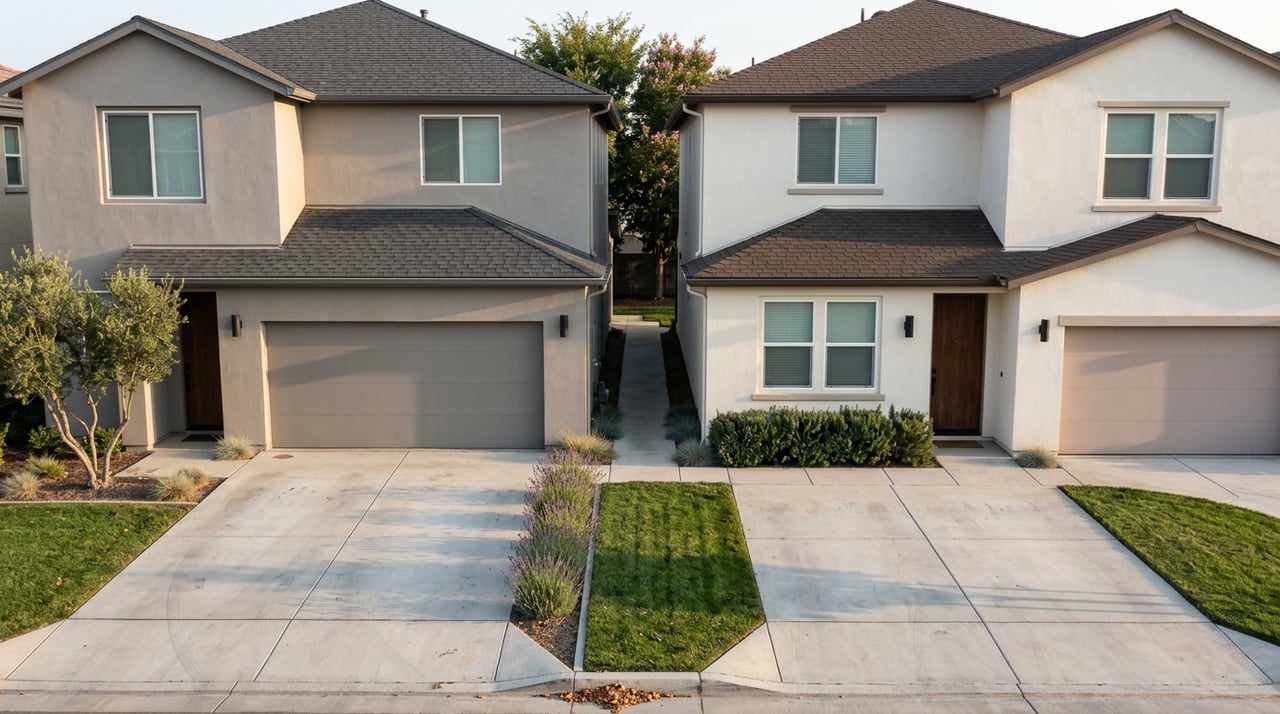
Picture two three-bedroom homes in Elk Grove, priced within a few thousand dollars of each other, both listed at roughly the same price per square foot. One buyer's monthly payment includes an extra $150 to $300 a month that never shows up in the listing price. The other buyer's does not. Same city, same school district boundary lines, same general market. The difference has nothing to do with the house and everything to do with a line on the property tax bill that most buyers never look for until it's too late to negotiate around it.
That line is Mello-Roos, and in Elk Grove it is not a footnote. It is a structural fact of how the city pays for itself, and it behaves differently depending on when and where a given parcel entered the system.
Elk Grove incorporated as a city in 2000. That date matters more than almost any other fact a buyer can know about a specific address, because it is the dividing line the city itself uses. Homes built before incorporation generally carry no Mello-Roos assessments at all. Homes built afterward and annexed into one of the city's community facilities districts do, and the amount depends on which district, when the parcel was added, and what that district was formed to pay for.
This is not a quirk of one subdivision. It is the financing model. The city has been explicit that its newer development areas are expected to fund their own infrastructure and ongoing services through these special taxes, while older, pre-incorporation neighborhoods simply do not carry that obligation. Two homes that look interchangeable on paper can sit on opposite sides of that line, and nothing about square footage or list price will tell you which side you're on.
Elk Grove currently administers seven special tax and assessment districts, and the city renews the levies on all of them every spring. The council approved the fiscal year 2026-27 levies at its May 27, 2026 meeting, and the packet lays out exactly what each district exists to fund.
| District | What It Funds |
|---|---|
| CFD 2002-1 (East Franklin) | Infrastructure improvements for the East Franklin Specific Plan area |
| CFD 2003-1 (Poppy Ridge) | Infrastructure and police services in the southern East Franklin area |
| CFD 2005-1 (Laguna Ridge) | Infrastructure and ongoing park and landscape maintenance for the Laguna Ridge Specific Plan |
| CFD 2003-2 (Police Services) | Public safety services tied to specific development areas |
| CFD 2006-1 (Maintenance Services) | Landscape and maintenance services citywide as new residential projects are annexed |
| Street Maintenance District No. 1 | Road repair, resurfacing, and long-term capital replacement, split into zones with individual rates |
| Street Lighting Maintenance District | Streetlight operation and maintenance in newer developments |
The maintenance and police service components are not one-time assessments. They fund ongoing operations, which means they are designed to persist, and in some cases to grow, for as long as the neighborhood exists.
Here is the part that catches buyers off guard even when they know Mello-Roos exists: the amount on today's tax bill is not necessarily the amount you'll pay in five years, and the mechanism for that increase is written into the formation documents, not left to chance.
Most of Elk Grove's CFD rates escalate automatically each year, either by a fixed percentage or by the Consumer Price Index, whichever is greater. The infrastructure component of the Laguna Ridge district, for example, is structured to rise 2 percent annually until the bonds are retired, a horizon the formation documents place as far out as the 2050-51 fiscal year for some components.
But the more revealing move happened this year on the maintenance side, and it shows how much discretion the city retains even within a capped system. Laguna Ridge's maintenance services tax had been set at 90 percent of its legally allowable maximum. In the 2026-27 levy cycle, the council voted to raise it to 95 percent, with staff telling council members the increase reflects the ongoing cost of maintaining the parks and amenities the district keeps adding. City staff have also signaled that the levy may need to climb toward the full allowable maximum over time as more of those amenities come online.
That is the part worth sitting with. The city's own finance staff describe the funding structure as designed to maintain service levels while accounting for continued growth, which means these districts are not simply inflation trackers. They are a lever the city uses to fund its own expansion. If you buy into a growing district, you are buying into a tax that has room to grow with it, up to whatever ceiling was set at formation.
For context, Elk Grove's median list price sat at roughly $679,000 in August 2026. A CFD obligation in the $2,500 to $6,500 annual range, which is typical for many of the newer Sacramento-area developments, is not a rounding error against that number. It's a meaningful share of the monthly carrying cost, and it's the kind of cost that doesn't show up until you're looking at the actual property tax bill rather than the listing price.
There is one exception worth knowing, and it applies narrowly. Senior citizens and disabled homeowners within the Elk Grove Unified School District boundaries can apply for up to a 70 percent reduction on a specific Mello-Roos line item tied to school bond measures approved by voters in 1987 and 1998. To qualify, the applicant must be at least 65 years old as of June 30 of the application year or fully disabled, must own and occupy the home as a primary residence, and must have had no school-age children living there for the prior period. The application window runs April 15 through June 30 each year, the reduction is not retroactive, and it has to be renewed annually.
This program only reduces one specific levy tied to school facility bonds. It does not touch the infrastructure or maintenance CFDs discussed above. But for a buyer who fits the criteria, or someone helping an aging parent evaluate a move, it is exactly the kind of detail that never surfaces on a portal listing and rarely comes up until someone asks the right question at the right office.
None of this shows up automatically when you're comparing homes online. Here's what actually resolves the question before you're under contract:
A tax bill is not a soft number the way a paint color or a countertop finish is. It is a fixed cost that compounds over the years you hold the property, and treating it as a footnote is how buyers end up recalculating their monthly budget after the first bill arrives instead of before they make an offer.
Does every new Elk Grove neighborhood have Mello-Roos? Not every one, but most development built and annexed after the city's 2000 incorporation falls into at least one of the seven current districts. The safest approach is to check the specific parcel rather than assume based on the neighborhood's reputation or build era.
Will my Mello-Roos payment ever go away? The infrastructure and bond-funded components have defined payoff dates, some decades out, after which that portion ends. The maintenance and police services components are structured to continue indefinitely, since they fund ongoing operations rather than one-time construction.
Reading a CFD disclosure and a property tax bill with the same scrutiny you'd apply to a loan estimate is not a small thing to get right, and it's exactly the kind of detail that separates a house you can budget around from one that surprises you every April. If you're comparing specific Elk Grove properties and want a second set of eyes on what the tax structure actually means for your monthly numbers, or you're wondering what your current home would be worth against this same backdrop, Valley to Valley Realty can walk through it with you. Get Your Home Valuation and let's look at the full picture before you write an offer, not after your first tax bill arrives.
Stay up to date on the latest real estate trends.
Whether you’re buying, selling, or planning ahead, Valley To Valley Realty is here to guide you with clarity and purpose. Reach out today and take the next step toward a confident real estate future.
Get In Touch With Us

VALLEY TO VALLEY REALTY
Francine Masudi | CA DRE# 02236450
(209) 513-3323
[email protected]
Rick Arciniega | CA DRE# 01101436
OFFICE HOURS
Monday - Friday
9AM - 5:00PM
ADDRESS 3017 Douglas Blvd, STE 300 Roseville, CA, 95661