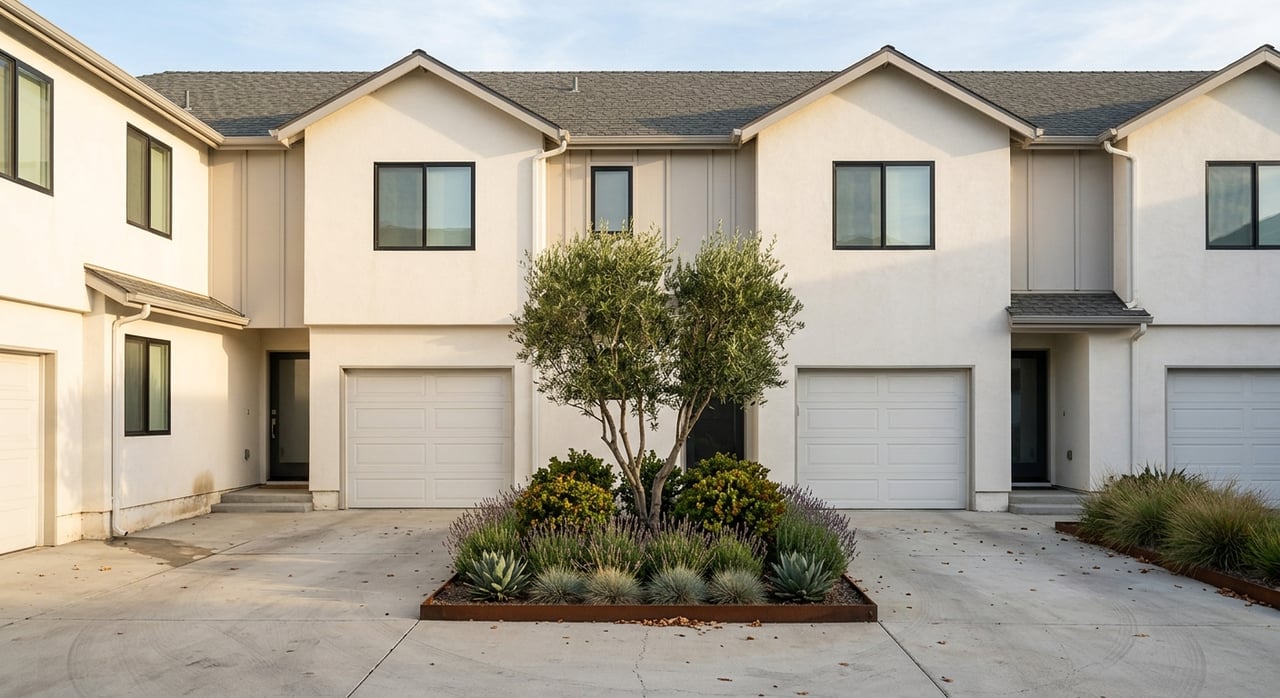
Dublin CA Condo and Townhome Options for Buyers
July 23, 2026
July 23, 2026
If you are comparing condos and townhomes in Dublin, the price tag is only part of the story. In this market, two homes can look similar online but come with very different ownership rules, monthly costs, and future obligations. The good news is that once you know what to look for, you can shop with much more confidence. Let’s dive in.
Dublin remains a competitive market. Over the three months ending in May 2026, Redfin reported a median sale price of $1.324 million, with homes receiving about two offers on average and selling in around 20 days.
Attached-home buyers still have meaningful options to compare. As of mid-July 2026, Dublin search results showed 61 condo listings plus 2 early-access listings, along with 43 townhouse listings. That range gives you choices across different budgets, layouts, and community settings.
Current listings also show a broad spread in price and size. Examples included condos from $399,000 for a 1-bedroom, 1-bath, 722-square-foot home up to larger attached options, while townhouse listings ranged from $769,000 for a 2-bedroom, 2.5-bath home to about $1.248 million for a 4-bedroom, 3-bath, 2,745-square-foot home.
A lot of Dublin’s attached-home inventory is tied to planned communities. The City of Dublin uses specific plans to guide development, and places like Dublin Crossing are intended to connect housing with trails and BART access.
Community features can be a real part of the appeal. The city notes that Wallis Ranch Community Park is an 8.85-acre park next to Wallis Ranch, with trails and sports amenities. If you want a home that blends lower exterior upkeep with access to shared neighborhood features, these areas are worth a closer look.
Here is the key point: in California, the label alone does not tell you everything you need to know. The California Department of Real Estate says common interest developments can include townhouses, garden-style units, and high-rise buildings.
That means a home marketed as a townhome may still function legally as part of a condominium-style ownership structure. Dublin listings reflect this overlap, with some properties marketed as “townhome style condominium” or “townhome style condo.”
So what should you focus on instead? Look beyond the marketing language and ask how the property is owned, what the HOA maintains, what you are responsible for, and what rules apply to the property.
Current Dublin listings suggest some general patterns, though they are not legal rules. Condos more often appear with smaller footprints, stacked or shared-wall layouts, balconies, and community amenities.
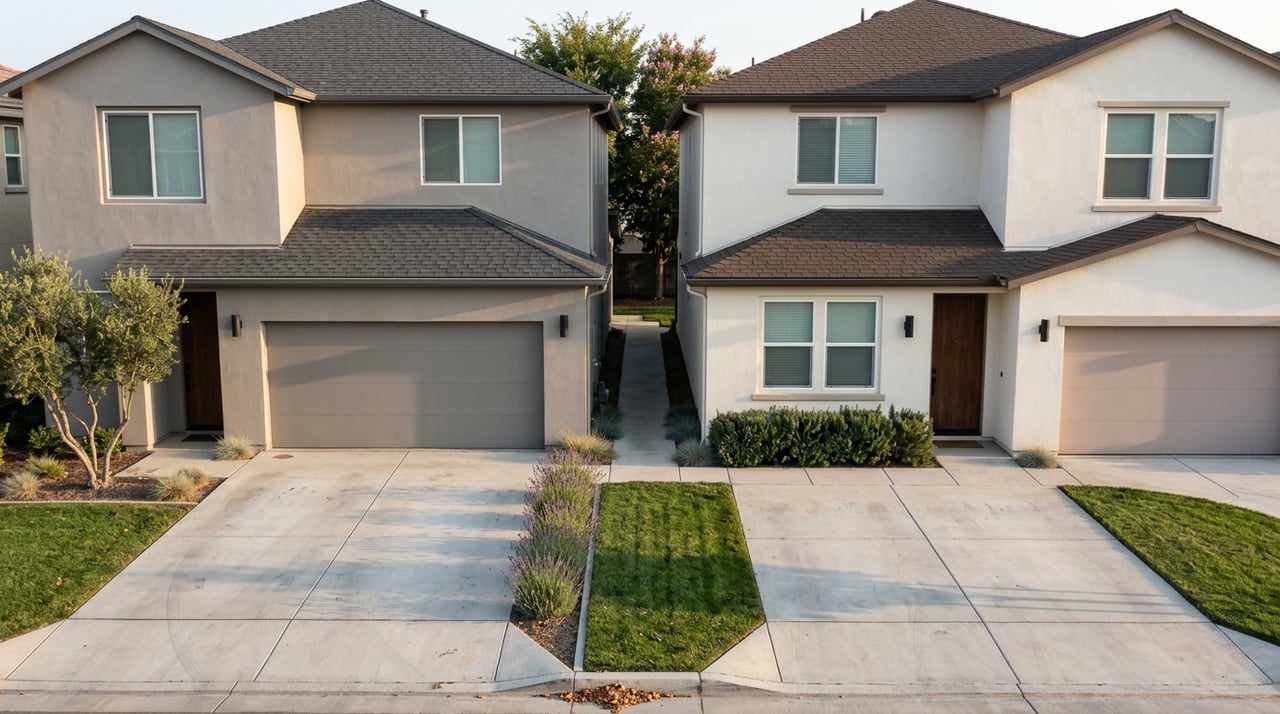
Townhouses more often show attached garages, dedicated driveways, side yards, and multi-level floor plans. These patterns can help you narrow your search, but they should not replace a careful review of the property documents.
If you buy in a common interest development, HOA membership is automatic. The California Department of Real Estate says the governing documents, often called CC&Rs, spell out the rules for common area responsibilities, assessments, insurance requirements, and architectural controls.
This matters because two attached homes with similar square footage can come with very different maintenance boundaries. In one community, the HOA may handle the roof and exterior. In another, more of that responsibility may fall on you.
For a buyer, that affects both cost and convenience. It also shapes your long-term planning, especially if you are trying to balance monthly affordability with future repair risk.
HOA dues are one of the biggest line items to review when comparing condos and townhomes. In Dublin’s current listings, examples included HOA amounts of $403, $408, and $420 per month on some attached homes.
A lower HOA fee is not automatically better. The association’s budget, reserve strength, and repair planning may matter more than the monthly number by itself.
The California Department of Real Estate says buyers should review the HOA’s CC&Rs, board minutes, budgets, insurance, and reserve strength before purchasing. That is especially important in larger planned communities, where there may be both a neighborhood association and a master association.
California Civil Code requires an annual budget report that includes a pro forma operating budget, reserve summary, reserve funding plan, insurance summaries, loan information, and any anticipated special assessments. For condominium projects, the report must also include FHA and VA approval status.
The reserve disclosure must show the regular assessment, any scheduled special assessments, whether reserves appear sufficient over the next 30 years, and the reserve funding percentage. That information can help you judge whether the community is planning ahead or just keeping dues artificially low.
In simple terms, a low HOA can look attractive upfront but become expensive later if the association is underfunded and major repairs are coming.
Special assessments are another reason to read the disclosures carefully. The Department of Real Estate notes they are often used for major repairs, replacements, or one-time costs such as rising insurance premiums.
There may also be an added city special-tax layer in some newer Dublin communities. The City of Dublin says owners in a CFD pay annual taxes for debt service and or city services, and current districts include Dublin Crossing, Dublin Crossing Public Services, and East Ranch. The city also notes a proposed CFD for Dublin Centre.
That means your real monthly housing cost may include:
Alameda County states that the county property tax rate is 1% of taxable value, while special assessments are direct charges on the tax bill. When you compare attached-home options, this full-cost view is often more useful than comparing list prices alone.
If you are buying a condo, financing status can matter. California Civil Code requires the annual budget report to disclose whether a condominium project is FHA-approved or VA-approved.
That detail can affect your options today and may also matter later when you refinance or sell. In practical terms, broader financing access can help support future buyer demand.
You should also watch for resale restrictions in specific programs. For example, the City of Dublin says the Francis Ranch release includes below-market-rate homes, and those homes are subject to resale controls, monitoring, and other program restrictions.
For some buyers, that can create an opportunity to enter the market. But it also means you need to understand the long-term rules before moving forward.
When you tour a condo or townhome in Dublin, the best questions are often financial and operational. They help you understand not just how the home looks, but how it will function as an ownership decision.
Ask questions like these:
Under California law, sellers in a common interest development must provide key disclosure documents, including recent budget documents, current regular and special assessments, unpaid amounts, approved assessment changes not yet due, rental restrictions, and the latest inspection report. Those documents are where many of the most important answers live.
If you want a lower entry price point, simpler exterior upkeep, or community amenities, a condo may be the better fit. Dublin’s current listings show that condos can offer a more accessible starting point, especially for buyers watching monthly cash flow closely.
If you want more interior space, an attached garage, or a layout that feels closer to a single-family home, a townhome may make more sense. Some Dublin townhouse listings also show features like dedicated driveways, side yards, and larger square footage.
The best choice usually comes down to four things:
That is the lens we would use in a smart purchase analysis. It keeps the decision grounded in both lifestyle fit and long-term financial clarity.
If you are weighing Dublin condos against townhomes, or trying to understand the true monthly cost behind a listing, Valley To Valley Realty can help you compare the details with a finance-first approach.
Stay up to date on the latest real estate trends.
Whether you’re buying, selling, or planning ahead, Valley To Valley Realty is here to guide you with clarity and purpose. Reach out today and take the next step toward a confident real estate future.
Get In Touch With Us
VALLEY TO VALLEY REALTY
Francine Masudi | CA DRE# 02236450
(209) 513-3323
[email protected]
Rick Arciniega | CA DRE# 01101436
OFFICE HOURS
Monday - Friday
9AM - 5:00PM
ADDRESS 3017 Douglas Blvd, STE 300 Roseville, CA, 95661