The $530,000 Sale That's Quietly Redrawing San Jose's Price Floor
September 17, 2026
September 17, 2026
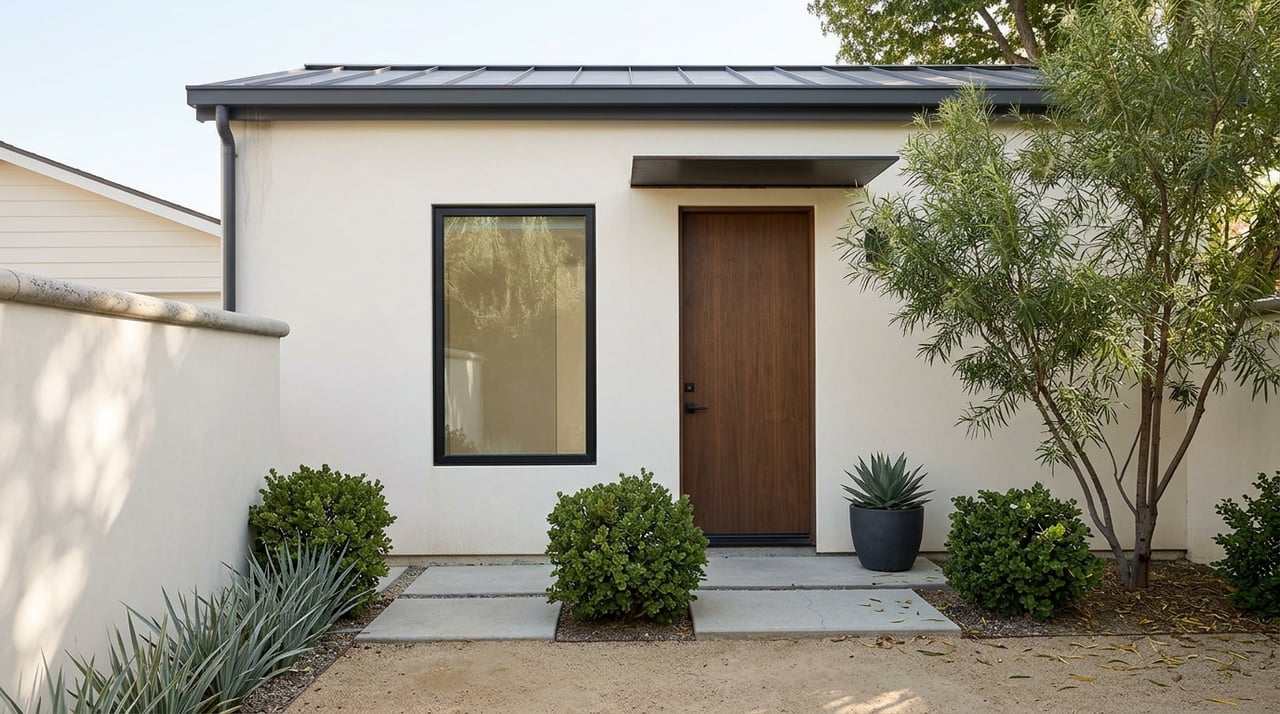
A 749-square-foot house near downtown San Jose closed escrow in early July 2026 for $530,000. That is not a typo, and it is not a fixer, a foreclosure, or a home sitting on contaminated soil. It is a two-bedroom, one-bathroom unit with its own utilities, its own parking, its own front door, and no shared walls with the main house behind it. The City of San José announced the sale on June 30, 2026 as the first arms-length purchase of an accessory dwelling unit sold as its own condominium anywhere in California.
If you have been watching San Jose's median price hover near $1.4 million and quietly concluded that ownership here starts at seven figures, this sale is worth your attention. It did not happen because the market crashed. It happened because the legal shape of what counts as "a home for sale" in San Jose changed, and almost nobody outside the planning department has caught up to it yet.
The property on Josefina Street was never subdivided. The land under it stayed as one parcel. What changed was the ownership structure: the city recorded a condominium plan that split the interest in the property into two separately titled units, one for the main house and one for the backyard unit, the same legal mechanism that lets neighbors in a duplex or townhouse complex each own their own unit without owning a fraction of the lot beneath it.
That distinction matters because it is the reason the buyer could get a mortgage, a deed, and a tax bill tied to a 749-square-foot house instead of a rental agreement tied to someone else's property. AlphaX RE Capital, the developer that built and sold the unit, structured the sale with no homeowners association fee attached, a detail its Chief Asset Management Officer Jia Li called a genuine proof of concept for what the company had been trying to prove was possible. The buyer, Daniel Aflakian, told ABC7 the arrangement would help people who want to own a place that is more affordable.
San Jose became the first city in California to adopt a local ordinance under AB 1033, the 2023 state law that allows this kind of ADU condo conversion, back in July 2024. The first conversion under that ordinance was approved in August 2025. It took almost eleven months from that approval to get an actual buyer through closing, which tells you something important before you get excited about this as a shortcut: the appraisal, lending, and title mechanics for this kind of unit did not exist yet. Somebody had to build them from scratch.
San Jose's median sale price for the three months ending August 2026 sat at $1.4 million, down 3.6 percent from the same period a year earlier. California's statewide median for a single-family home hit a record $930,260 in May 2026. Set the ADU sale next to either of those figures and the gap is not small. The Josefina Street unit sold for roughly $400,000 less than the statewide median and close to $870,000 under San Jose's own local median.
That gap is the whole point of this piece. A median price describes the middle of a distribution of full-lot, full-structure home sales. It does not describe a unit type that, until eleven months before this closing, could not legally be sold on its own at all. When a new ownership category appears below the existing floor, the median does not move to capture it right away. It just sits there next to the median as an unrepresented number until enough transactions happen for anyone tracking city data to notice.
The ADU condo sale is the headline, but it is riding on top of a wider and older shift. Senate Bill 9, in effect statewide since January 2022, lets many single-family lots in San Jose be split into two parcels, with up to two units allowed on each. San Jose's own planning department reported that nearly 60 subdivisions, along with more than two dozen single-family and duplex filings, had been submitted as of March 2025. That is the most recent count the city has published, so treat it as a floor rather than a current tally, but it establishes that this is not a fringe experiment.
Mayor Matt Mahan put the scale of it plainly during an August 2026 discussion of the city's General Plan update, telling CBS News that under SB9, most residential lots in the city today can already be converted from one home up to four units, and that the community is really just starting to learn more about the possibility. Combine SB9's lot-split rights with San Jose's ADU ordinance, which allows up to three additional units on a qualifying property, and a single-family parcel that would have shown up in the county assessor's records as one taxable unit for decades can now legally become a small portfolio.
None of this means a buyer priced out of San Jose's median should expect a flood of $530,000 listings next quarter. As of July 2026, the city had approved a second ADU condo conversion with two more applications under review, which is still a handful of units in a city of hundreds of thousands of parcels. AlphaX has said it plans to complete 86 more ADU condominiums over the next year, which would be the first real test of whether lenders, appraisers, and title companies can process this unit type at any volume rather than as a one-off.
The friction points that slowed the first sale have not disappeared. Any buyer or seller looking at an ADU condo conversion should expect a lender to require sign-off before recording a condominium plan on a mortgaged property, a formal condominium plan and a set of governing rules recorded with the county, and an appraiser who is pricing a product type with almost no comparable sales history to draw on. None of that is a reason to avoid the structure. It is a reason to expect a longer runway than a conventional resale.
If you are a buyer who has been priced out of San Jose's conventional resale market, this is a segment worth tracking rather than one to count on closing next month. The unit types most likely to follow this model sit on lots with room for a detached backyard structure and owners willing to go through condo-ization rather than a straight rental arrangement.
If you already own a qualifying lot, the calculus looks different. A homeowner sitting on a property with SB9 lot-split potential or ADU condo eligibility is holding an asset with more than one exit path: keep the ADU as a rental, sell the whole property as-is, or convert and sell the backyard unit separately while keeping the main house. That third option barely existed two years ago. Whether it makes financial sense depends on construction cost, lender requirements, and how a given lot's tax basis will be treated once it is split into separate condominium interests, which is a conversation worth having with both a real estate professional and a tax advisor before committing to a design.
If you are selling a conventional single-family home in a neighborhood where SB9 splits are becoming common, expect buyers and appraisers to start asking whether a comparable sale down the street involved a lot that was later split. That history does not always show up cleanly in a standard comp pull, and it is worth confirming before you set an asking price based on recent sales in your area.
Is an ADU condo the same thing as a duplex? No. A duplex under SB9 creates two primary residential units, often built as new construction on a split lot. An ADU condo conversion takes an existing backyard unit and an existing main house on one lot and gives each a separate title, without splitting the land itself.
Does converting to an ADU condo change the property tax bill? The parcel now carries more than one titled interest, and each new deed typically triggers its own reassessment under California law. Anyone considering this route should confirm the specifics with the Santa Clara County Assessor's Office before assuming what the combined tax bill will look like.
Can any San Jose homeowner do this? Only if the ADU meets the city's condominium conversion checklist, which covers separate utilities, access, and construction standards, and only if any existing mortgage lender consents to the condominium plan being recorded. The city's ADU Ally Program is a reasonable starting point for homeowners who want to find out if their specific lot qualifies.
This is still an early chapter, and the volume of sales so far would not change anyone's estimate of San Jose's median price in a meaningful way yet. But the legal path is open, the pipeline behind it is real, and the first sale proved every part of the process, appraisal, financing, title, and closing, actually works end to end. That is usually how a new segment of a housing market starts, quietly, on one street, months before anyone tracking the citywide numbers notices it happened.
If you are trying to figure out what your own lot, budget, or timeline actually supports in San Jose or anywhere across the Central Valley and Tri-Valley corridor, Valley to Valley Realty can walk through the numbers with you and help you see past the headline median to what your specific property or purchase can really do.
Stay up to date on the latest real estate trends.
Whether you’re buying, selling, or planning ahead, Valley To Valley Realty is here to guide you with clarity and purpose. Reach out today and take the next step toward a confident real estate future.
Get In Touch With Us
VALLEY TO VALLEY REALTY
Francine Masudi | CA DRE# 02236450
(209) 513-3323
[email protected]
Rick Arciniega | CA DRE# 01101436
OFFICE HOURS
Monday - Friday
9AM - 5:00PM
ADDRESS 3017 Douglas Blvd, STE 300 Roseville, CA, 95661